Synphysica(FANG Chih Hsuan & CHOU Chiao Chi)
- TOP >
- Archives >
- Residency Program >
- Synphysica(FANG Chih Hsuan & CHOU Chiao Chi)
International Creator Residency Program
update: 2026.1.27
Synphysica (FANG Chih Hsuan & CHOU Chiao Chi)
| Participating Project | International Creator Residency Program (Individual Projects) |
|---|---|
| Activity Base | Taipei |
| City / Place stayed | Tokyo |
| Period | 2026.1 - 2026.3 |
Purpose of the residency
This project draws inspiration from Japanese garden and bonsai culture to examine the relationship between human-controlled environments and the self-regulating mechanisms of ecological systems. During the residency, field research will be conducted in Tokyo’s historic gardens and surrounding forest landscapes to analyze ecological distributions between gardens and forests, and to explore how these structures extend broader ecological imaginations of natural forests. Integrating living plants with environmental sensing and control technologies, the project aims to develop a spatial ecological installation that bridges traditional horticultural aesthetics and contemporary ecological practices, while remaining open to multiple interpretations of forest ecologies.
Plan during the residency
・Visit Kokufu Bonsai Exhibition
・Visit and explore its gardens featuring exquisite bonsai displays
Activities during the residency
Inspired by Japanese garden preservation and bonsai culture, this project explores the relationship between human-controlled environments and self-regulating ecological systems. During our residency, we conducted field research in Tokyo’s historic gardens and surrounding forests, documenting vegetation patterns and environmental characteristics across these landscapes. By examining the relationship between cultivated gardens and natural forests, we explored how these different environments might expand our understanding and imagination of forest ecologies.
Building on our ongoing practice of integrating living plants with environmental sensing and control technologies, we are developing a spatial ecological installation that incorporates miniature landscapes and Mixed Reality (MR). Through the interaction between physical environments and digital spaces, the project seeks to establish a dialogue between traditional horticultural aesthetics and contemporary ecological art practices, while opening new possibilities for experiencing and interpreting forest ecologies.
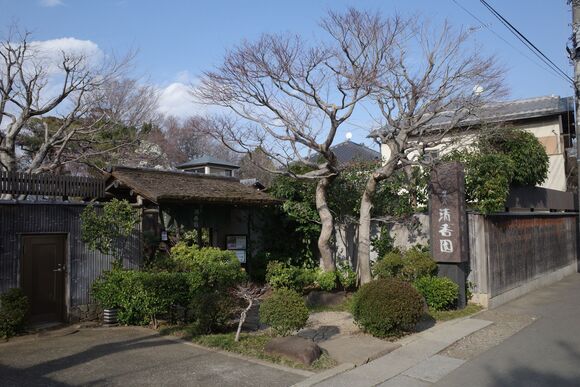
Exterior of Seikouen Bonsai Garden in Omiya bonsai village
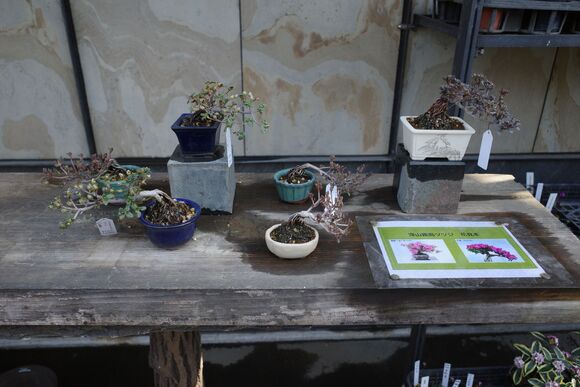
Understanding the Types of Soekusa in Seikouen Bonsai Garden
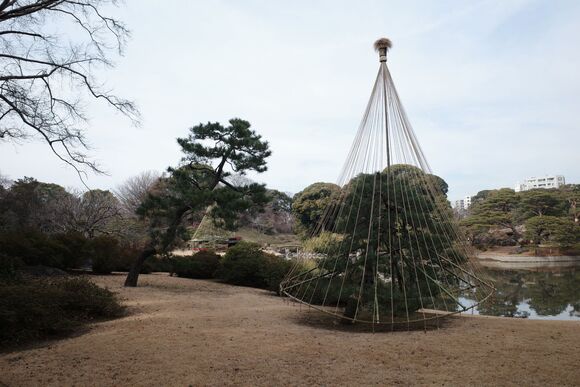
Rikugien Gardens - Winter Maintenance and Visual Height Restrictions
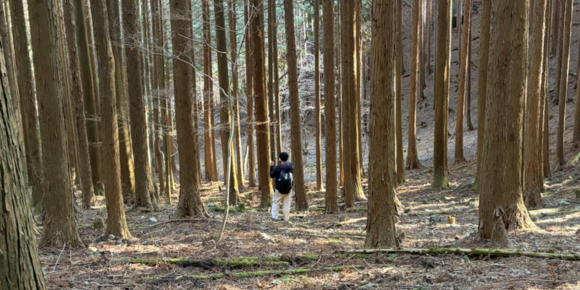
Environment Scanning and Material Collection
Photo: LI Cheng-Liang
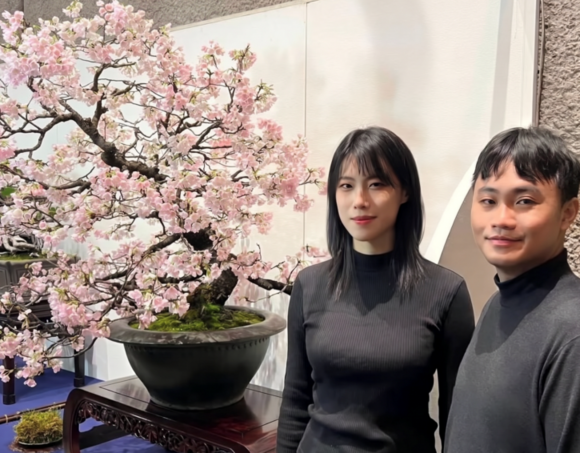
On-Site Viewing of the 100th Kokufu Bonsai Exhibition
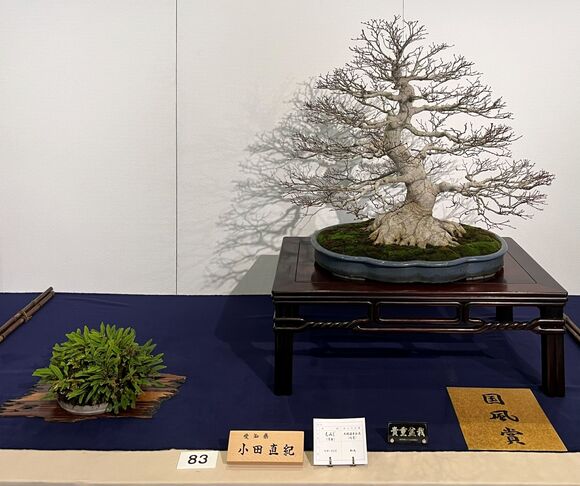
Examples of Soekusa in Kokufu Bonsai Exhibition
Outcome of the residency
During our residency, we completed foundational research on traditional gardens, bonsai exhibitions, and nearby forests, which informed our artistic practice. Beyond our expected outcomes, the greatest gift of these three months was discovering Tokyo’s deep commitment to caring for its traditional culture and ecological environments through our visits to nine historic gardens, Omiya Bonsai Village, and surrounding forests.
This spirit is reflected in Tokyo’s history and everyday life: the resilience of Omiya Bonsai Village after its relocation following a natural disaster, the dedication behind the 100th Kokufu Bonsai Exhibition, and the thoughtful efforts of the Tokyo Metropolitan Government’s Bureau of Construction to balance urban development with garden preservation. These include building height restrictions to protect garden landscapes and admission systems to support plant health and manage tourism. We were especially moved by the power of ordinary people, from the citizens’ movement to save Tonogayato Garden between 1966 and 1974 to Mukojima Hyakkaen, a garden created by townspeople rather than the aristocracy. Together, these efforts have shaped Tokyo’s coexistence of tradition and modernity.
Our research also revealed how natural disasters and contemporary needs have shaped these landscapes. Although their preservation involved conflicts and struggles, we found these histories deeply inspiring. They showed us the value of dialogue and ongoing negotiation in caring for a shared environment. Urban development need not always mean removal and reconstruction; people, plants, and cities may find ways to coexist and thrive together.
We carried this appreciation into the care of our artworks. Our practice is based on physiological data analysis and real-time responses. After the exhibition, we arranged for the plants to be rehomed with adopters who could continue caring for them. Moving forward, we hope to connect technological development with cultural and philosophical reflection, remain attentive to historical contexts, and always place “respect for the Other” at the heart of our practice.
If we return to TOKAS, we hope to engage more boldly and deeply with senior garden caretakers, local horticultural masters, and forest researchers.
Our Facilities