LEE Hyewon
- TOP >
- Residency Program >
- Invited Creators >
- LEE Hyewon
Research Residency Program
update: 2026.6.3
LEE Hyewon
| Participating Project | Research Residency Program |
|---|---|
| Activity Based | Seoul |
| City / Place stayed | Tokyo |
| Period | 2026.5 - 2026.7 |
Purpose of the residency
My participation in the TOKAS residency serves two primary purposes. First, I aim to conduct preliminary research for my doctoral dissertation, which examines the visual culture of Manchukuo and its intersections with techno-utopianism and techno-Orientalism, research that proved difficult to pursue during my prior fieldwork in China's Northeast provinces. Second, I seek to build relationships with Japanese researchers and artists for related future projects. Japan's extensive archives and active scholarly community make TOKAS the most productive base for advancing both the dissertation research and its associated collaborative endeavors.
Plan during the residency
- Conducting archival research on Manchukuo-era visual materials
- Collecting primary sources related to Manchukuo's technological modernity and colonial visual culture
- Surveying film materials documenting Manchukuo-era industrial and urban imagery
- Translating Techno-Orientalism 2.0 (ed. David S. Roh, 2025), using the residency period to contextualize its theoretical frameworks within an East Asian perspective
- Meeting and conducting research exchanges with scholars and specialists in Manchukuo visual culture and Japanese modern culture respectively
Activities during the residency
During the 2026 TOKAS Research Residency, I investigated the visual culture of the puppet state of Manchukuo (1932-1945) and its relation to the discourse of techno-orientalism, asking how imperial Japan's images of a techno-utopia prefigure the dystopian representation of Asian cities in contemporary visual culture.
I worked along two tracks. As preparatory theoretical research, I co-translated Techno-Orientalism 2.0: New Intersections and Interventions into Korean. As field research, I examined Manchukuo's pictorial magazine Manshu Graph (満洲グラフ), posters, and postcards across libraries and museums in Tokyo, Nagoya, Kyoto, and Tottori. I shared these findings through events at TOKAS, and a guest lecture at Tokyo University of the Arts, building a Japan-based research network for a forthcoming exhibition and publication.
Outcome of the residency
The residency produced two principal outcomes. First, I completed the Korean translation of Techno-Orientalism 2.0: New Intersections and Interventions (co-translated with Aim Han), which I presented publicly for the first time at the Open Studio. Second, I built a visual and textual database of Manchukuo-era materials through first-hand archival research at the National Diet Library (NDL), the Tokyo Metropolitan Library, and The National Museum of Modern Art, Tokyo (MOMAT), and through a dedicated research trip to the Memorial Museum for Agricultural Emigrants to Manchuria (Nagano), Nagoya, Kyoto, and Yusei Deai no Yakata (Tottori). A research interview with Professor Kishi Toshihiko, a leading authority on Manchukuo's visual media, was central to sharpening my analysis.
On this basis, I refined the project's core argument: that Manchukuo functioned as an early laboratory in which a visual grammar of "Asia as the future" was systematized, and that this same grammar was later inverted into the cyberpunk dystopia. I shared successive stages of the argument at TOKAS and Tokyo University of the Arts, and I established a network of scholars, curators, and artists based in Japan.
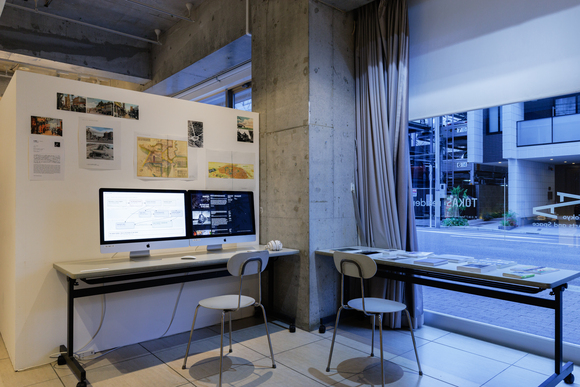
Installation view at OPEN STUDIO
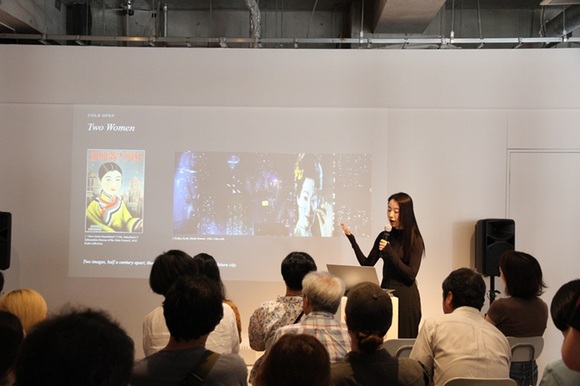
Presentation at OPEN STUDIO
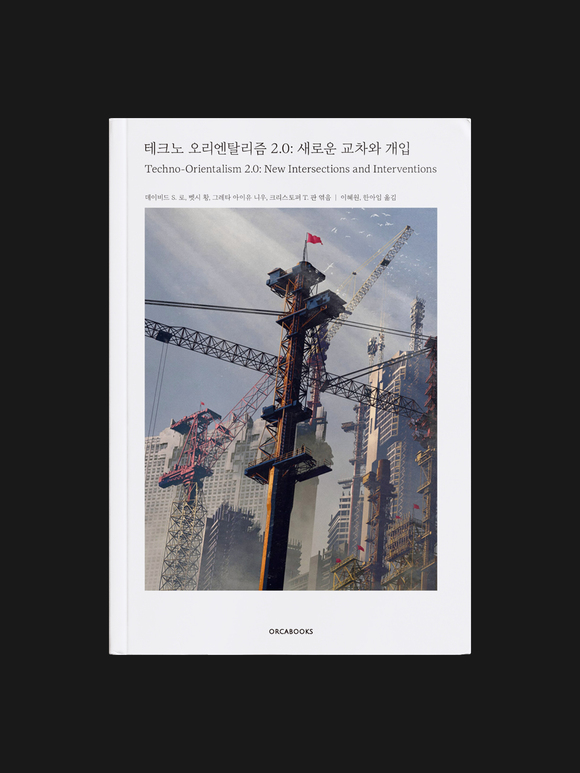
The Korean edition of the book Techno-Orientalism 2.0: New Intersections and Interventions
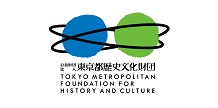
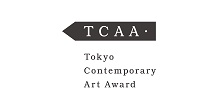
Our Facilities