SOH Kay Min
- TOP >
- Archives >
- Residency Program >
- SOH Kay Min
Research Residency Program
update: 2025.9.22
SOH Kay Min
| Participating Project | Research Residency Program |
|---|---|
| Activity Based | London |
| City / Place stayed | Tokyo |
| Period | 2025.9 - 2025.11 |
Purpose of the residency
The purpose of participating in the TOKAS residency is to research the lifeworks, legacies, and art historical contexts of the father-daughter artist-scientist duo Nakaya Ukichiro (1900–62) and Nakaya Fujiko (b. 1933). Together their works represent an early link between the mediatisation of the elemental, and the elemental as media. Being in Tokyo as part of the TOKAS program allows me to purposefully research specific aspects of their lifework that took place in the city, such as Ukichiro-san’s founding role in the film production company Iwanami Productions, and Fujiko-san’s founding of Japan’s first video art space Video SCAN in Harajuku.
Plan during the residency
During the residency, I plan to undertake archival research in the following:
・Nakaya Ukichiro Archive Foundation and Kagaku Ukan
・Iwanami Productions Archive – Documentary Film Preservation Centre, University of Tokyo
・National Film Archive, Japan
・Japan Center for Asian Historical Records, National Archives of Japan
・NTT Intercommunication Centre (ICC) Video Archive and Library
Activities during the residency
My residency project Film, Fog, Snow: Elemental Media of Nakaya Fujiko and Nakaya Ukichirō forms a chapter of my broader research probing the potential of weather as a witness to elucidate alternative postwar historiographies of cross-regional political ecologies. During the residency, I explored the elemental as media and the mediatisation of the elemental, through tracing the connections between the lifeworks and legacies of the luminary fog sculptor and video artist Nakaya Fujiko (b. 1933) and her father, the experimental physicist, essayist, early film afficionado and creator of the world’s first artificial snowflake, Nakaya Ukichirō (1900–1962). This exploration took place through meetings and conversations with local artists, film archivists, curators, and researchers, each of whom brought unique and invaluable insights that helped weave together the otherwise disparate threads of how an artist’s dedication to personal memory and media connects to a larger story of weather during the Cold War.
Outcome of the residency
The time and space afforded by the residency at TOKAS allowed me to cultivate critical new connections and develop important understandings of the larger artistic and cultural contexts under which Nakaya Fujiko has been working to preserve her father’s legacy, and likewise, the historical and political circumstances that shaped his work and thinking during the wartime and immediate postwar years of Japan during the mid-20th century. I was glad that in my position as an outsider, I was able to serve as a bridge connecting different stakeholders involved in the preservation of the various aspects of Nakaya Ukichirō’s legacy. Establishing connections with each of these actors individually also yielded substantial research outcomes for myself, such as the provision of selections of Nakaya Ukichirō’s published writings from the Foundation—which are plentiful but not necessarily easy to locate without specialist knowledge—and the generous provision of film and video material (in the form of DVDs) for temporary viewing from the Documentary Preservation Film Centre (記録映画保存センター) —which are also plentiful but not usually available to view for free or at such short notice.
Since the conclusion of the residency, I have remained in touch with the Nakaya Ukichirō Foundation with plans to return to Japan in 2026/27 to further develop my research on the Nakaya Ukichirō Archives and the collection of the Nakaya Ukichirō Museum of Snow and Ice in Kaga City.
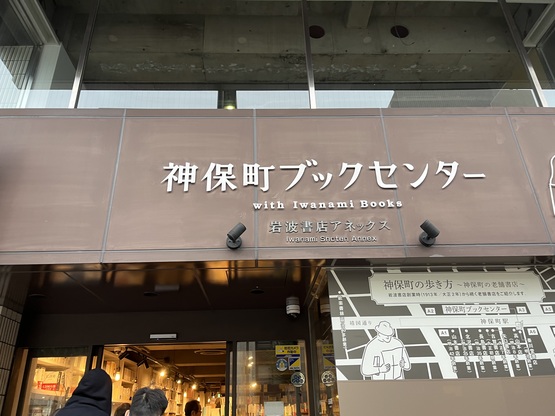
Visit to the current Jimbochō Book Center in the Jimbochō neighbourhood, a stone’s throw away from the original Iwanami Shoten office and Iwanami Hall mini-cinema, 11 October 2025.
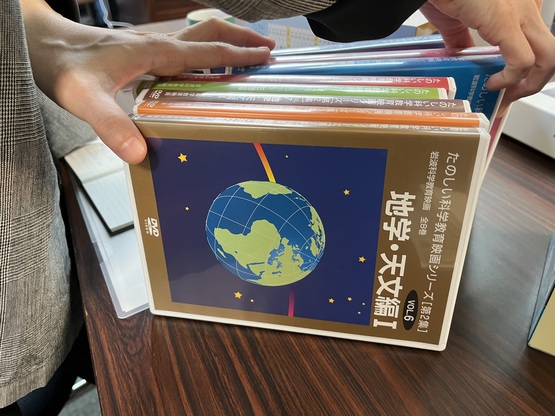
Film archivist Hamasaki Yuko introducing contemporary DVD box set reproductions of science films from the Iwanami Productions, still being used in classrooms today, 17 October 2025.
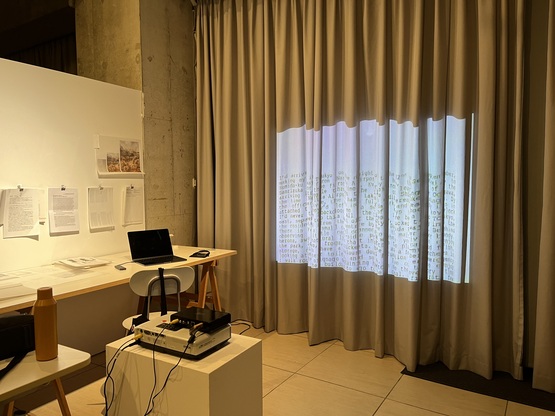
First projection tests in preparation for TOKAS Open Studio, 29 October 2025.
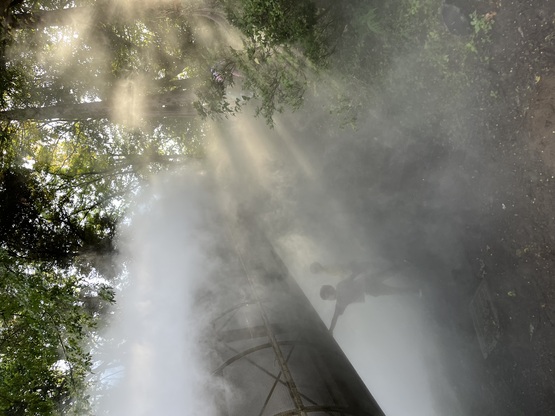
Children playing in Nakaya Fujiko’s Foggy Forest fog installation. Showa Kinen Park, 2 November 2025.
Our Facilities