Syaura Qotrunadha “Triptych”
- TOP >
- Archives >
- Exhibitions / Performances >
- Syaura Qotrunadha “Triptych”
Syaura Qotrunadha “Triptych”
OPEN SITE 10 | Open Call Program【Exhibition】
Triptych, a three-part video work, explores Indonesia’s education system and social norms, which have been shaped by a history of colonial rule, land appropriation, and visions of the future. Each of the videos depicts a story of resistance to colonial influence in a different era, and reflects on water as both a catalyst for scientific and technological advancement, and as a tool for extracting natural resources from other nations. Through her contemporary art practice, Qotrunadha reexamines history and explores how postcolonial nations can repurpose contemporary science and technology.
| Period | Nov 22 (Sat) - Dec 21 (Sun), 2025 |
|---|---|
| Closed | Mondays (except Nov 24), Nov 25 |
| Time | 11:00-19:00 |
| Admission | Free |
| Venue | Tokyo Arts and Space Hongo: Space B (2F) |
| Project collaborators | A. Semali, Timothy Satyaabieza, Dian Suci Rahmawati, Armand Perdana, LOKUS Foundation, Michael Sadena Dibyantoro, Aqi Singgih, BaBam, Bagas Oktariyan, M. Akbar |
| Cooperation | SAM Funds for Art and Ecology (The Fattest Land at the Fair), Hyundai Motor Group (Fluidity of the Future Machines) |
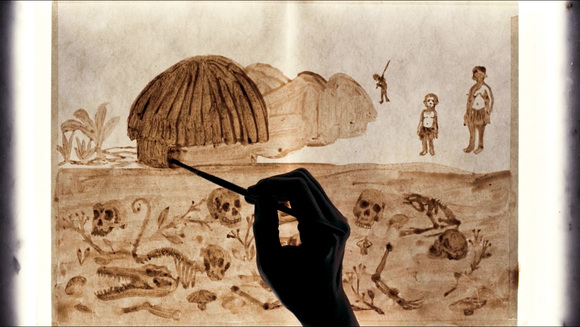
The Fattest Land at the Fair 2021 Courtesy of the artist
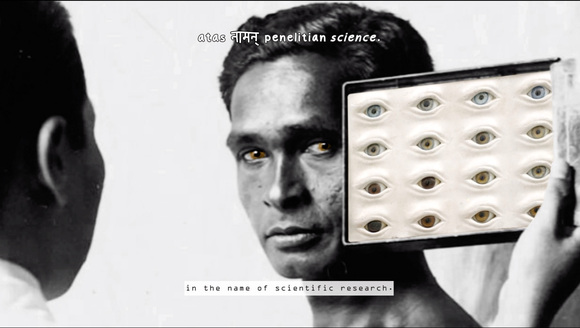 The Fattest Land at the Fair 2021 Courtesy of the artist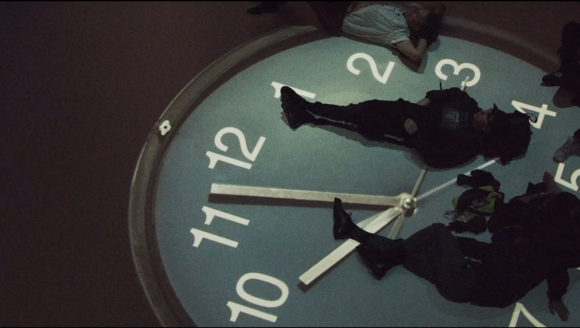
Fluidity of the Future Machines 2021 4th VH Award Documentation @Ars Electronica Festival 2022
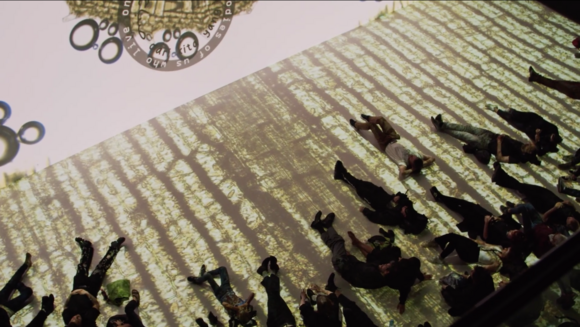 Fluidity of the Future Machines 2021 4th VH Award Documentation @Ars Electronica Festival 2022
Related Event
Talk “LOCAL SIGNALS/GLOBAL WAVES: Video Technology in Indonesian Artistic Practice”
Qotrunadha, together with two other Indonesian artists who also work with video technology, will hold a talk session. They will discuss the emergence and transformation of video art in Indonesia, the turning points brought about by the COVID-19 pandemic, and the expansion of artistic expression—reflecting on both the social context and their individual practices. Please join us for this rare and valuable opportunity to hear directly from the artists about these evolving dynamics.
| Date | Nov 30 (Sun) 16:00- |
|---|---|
| Speaker | Syaura Qotrunadha |
| Guest | Syaiful Aulia Garibaldi (Visual Artist & Co-Founder of LOKUS Foundation) Born in 1985 in Jakarta and working in Bandung. His practice represents a continuous search for connection between nature and technology, between what grows and what is programmed. Rizki Lazuardi (Artist & Curator) Born in 1982 in Semarang, is an Indonesian artist and curator who works mainly with moving images and expanded cinema. Central to his practice is subjects related to institutionalized information. Participated in International Creator Residency Program (2024) and exhibited in TOKAS Creator-in-Residence 2025 Exhibition “Lingua Franca.” |
| Admission | Free |
| Language | Japanese / English |
| Venue | Tokyo Arts and Space Hongo: Space B (2F) |
Profile
Syaura Qotrunadha is an Indonesian artist whose dynamic portfolio spans diverse mediums, including photography,
textiles, installations, paper, video art, and archives. Her works merge artistic practice with cultural engagement. With
an MFA in Fine Art, and a background in both mechanical engineering and photography, she forges technical skills
with creative exploration. Recent exhibitions: “Indonesia Bertutur: VISARALOKA”, Neka Art Museum, Bali, 2024,
“Indonesian Young Artist: Redefining the Indonesian Aesthetic,” Gajah Gallery, Singapore, 2023.
https://www.syaurasyau.com/
Catalog
To download the catalogs of "OPEN SITE 10," please click here.
Review
A Circulating Dance Around Desire
KONDO Yuki (OPEN SITE 10 Jury member / Program Director, Tokyo Arts and Space)
This exhibition, structured around three video works by Syaura Qotrunadha made in 2020 and 2021, seeks to articulate the current position of Indonesia through a constellation of fragments shaped by different eras, motifs, methods of video production, and modes of narration. The artist explains that the three works refer respectively to the past, the present, and the future, and that their stories are voiced by three distinct figures: a mother, a child, and an elderly person. Each narrative unfolds in a non-linear, non-sequential way, with episodes assembled fragmentarily. These fragments at times overlap, at times supplement one another, and at times resonate, giving shape to individual scenes.
Each work is accompanied by text that has been carefully edited and visually composed, though legibility is not treated as a priority. Despite the exhibition’s relatively high density of information, this deliberate opacity is a consistent thread throughout. Each video includes narration in Indonesian, along with Indonesian subtitles. These subtitles reflect Qotrunadha’s research into the history and structure of language in Indonesia, which she began in 2016. Loanwords drawn from various sources appear alongside the Indonesian text in their original scripts, including Sanskrit, Arabic, English, and Dutch, making the subtitles difficult to read even for viewers fluent in Indonesian. This difficulty of reading evokes the low literacy rate associated with the country’s common language, as well as the distance between record and memory, written history and oral tradition. At the same time, the unruly richness of these layered languages calls to mind the diversity of Indonesia itself.
The first work in the exhibition, The Fattest Land at the Fair, which addresses the past, begins with accounts of the frenzy surrounding the identification of bodily characteristics and the collection of human bones during the colonial period, undertaken in the pursuit of “pure races.” These practices gave rise to racial anthropology, and their effects did not end with the one-sided exploitation of the colonized by the colonizers. The desire to exploit was, in turn, reproduced among the exploited. As science and technology advanced, these impulses were further systematized and institutionalized, developing so as to generate new forms of unequal wealth distribution distinct from those of the colonial era. The work shows how such primal desires, circulating and accumulating across time, have expanded into forms that defy distinctions between good and evil and have become part of our own everyday lives. The box-like exhibition space, painted in reddish earth tones reminiscent of an excavation site or a monumental tomb, evokes a condition in which all bodies are rendered into data and, like the human bones once unearthed from the ground, extracted as resources that generate wealth, continually exploited by vast, anonymous forces of capital.
In the video work ALANLIC (Astronaut, Living Area, and Nomads’ Land Identity Card), which addresses the present, a figure is shown silently tearing up rejected essays collected from recent graduates, soaking them in water, and steadily molding them into a substance resembling papier-mâché. A high-pitched voice-over begins by addressing the space industry, the advanced education required to enter it, and the elite training systems that sustain it, then gradually shifts toward questions of character formation within the family and the community. The childlike voice maintains a consistent tone, yet slowly begins to register something like dissatisfaction and anger directed at society. The text in this work is visible only when viewers stand close to the wall and cast shadows upon it, rendering it nearly impossible to read. While the work conveys a quiet irritation and a sense of separation, the apple-shaped papier-mâché objects that appear both on the suspended video screen and within the exhibition space can also be read as symbols of resistance. They suggest an attempt to dismantle and discard data (or knowledge) and to pursue new fruits of wisdom through direct action.
In Fluidity of the Future Machines, the work dealing with the future, a series of episodes centered on water unfolds against footage shot using microscopes and drones, oscillating between the micro and the macro, and between tradition and technology. Text in swirling, spiral-like formations across the walls, referencing Katsushika Hokusai’s The Great Wave off Kanagawa (1831), is composed of questions about water and responses generated by ChatGPT. A voice-over telling stories of water on Earth gradually shifts toward the circulation of fluids within the human body. As the two narratives merge, the work concludes with the statement: “But there is one thing that we must face while living on earth as humans even though everything has changed: ego.”
Produced through open-ended processes, these works remain unresolved and fragmentary, both in their mode of making and in their resulting form, leaving suspended possibilities for futures that might unfold in either positive or negative directions. The exhibition title “Triptych” suggests not a linear sequence of three narratives organized by hierarchy or progression, but a structure in which the three stories interrelate and come into being simultaneously. The narratives move from racial anthropology in the colonial era toward visions of a technological future, yet at every point they continue to speak to the present moment. For this reason, the tale of present-day Indonesia gradually connects with our own, conveying a single, shared contemporaneity. By casting doubt on, and reexamining, the identity (ego) that shapes us, the work moves back and forth—between national or abstract desires rooted in sweeping historical forces, and the scale of individual lives and everyday experience—circling continuously through the space between them, and around us.
Participating Creator
Our Facilities