TAKEMASA Tomoko “Is This Vessel Me?”
- TOP >
- Archives >
- Exhibitions / Performances >
- TAKEMASA Tomoko “Is This Vessel Me?”
TAKEMASA Tomoko “Is This Vessel Me?”
OPEN SITE 10 | Open Call Program【Exhibition】
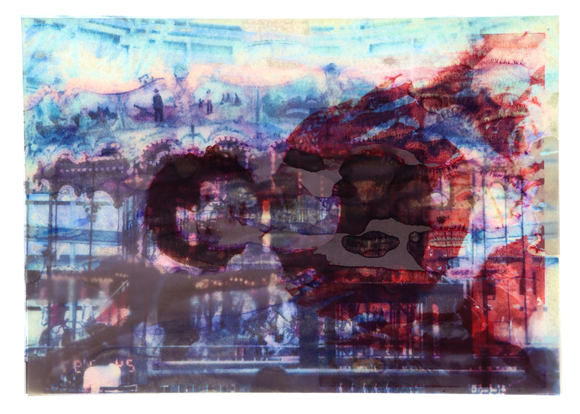
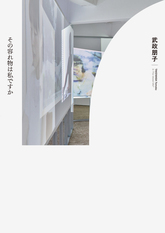
This video installation centers on interviews about photographs of others and images eroded by water. Footage of people speaking about photos of strangers disrupts the idea of the self in possession of memory and experience, while video projections employing wet printed matter, projected from the reverse side of the screen, emphasize the instability of the individual as image. In a space that shifts along with the viewer’s shadow, the work creates time for reflecting on the mind and body as ambiguous vessels, and questions how the boundaries of the cognition might be expanded.
| Period | Nov 22 (Sat) - Dec 21 (Sun), 2025 |
|---|---|
| Closed | Mondays (except Nov 24), Nov 25 (Tue) |
| Time | 11:00-19:00 |
| Admission | Free |
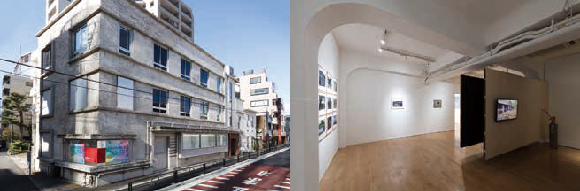
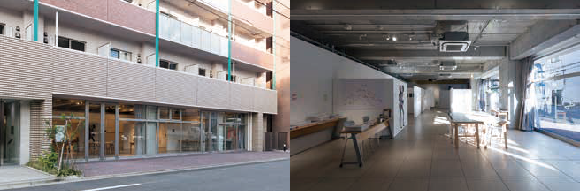
| Venue | Tokyo Arts and Space Hongo: Space A (1F)
|
IAMNOWHERE 2025
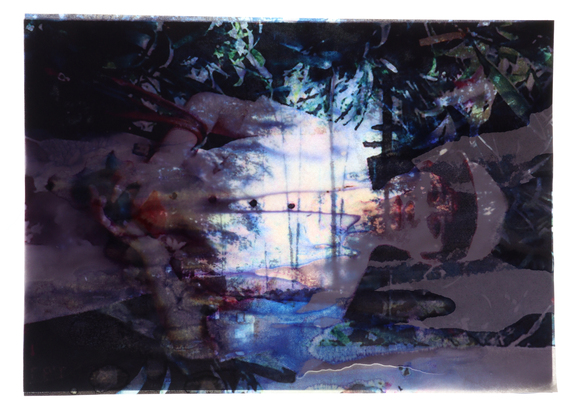
IAMNOWHERE 2025
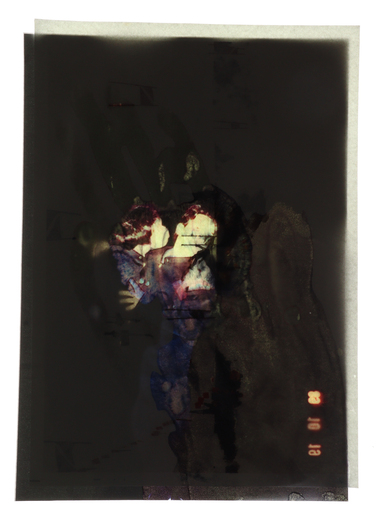
IAMNOWHERE 2025
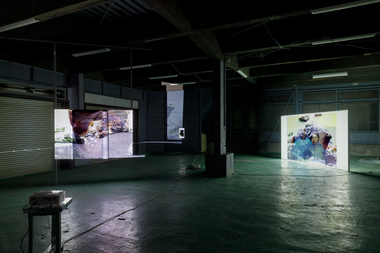
“UNKNOWN” 2023 Installation view
Photo: MANIWA Yuki
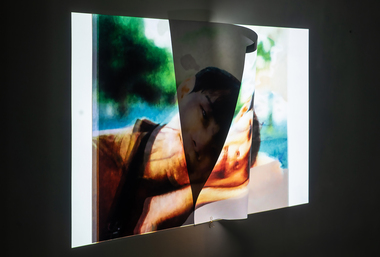
“Drawing with different eyes” 2023 Installation view
Photo: ITO Hisaya
Courtesy of TANAKA NAGAMINE RYOSUKE
Related Event
Performance
| Date | Dec 6 (Sat) 16:00- |
|---|---|
| Performer | Oyama Emi (Dancer, Choreographer) |
| Admission | Free |
| Venue | Tokyo Arts and Space Hongo: Space A (1F) |
Profile
Takemasa Tomoko produces work grounded in the narratives and photographs of others, centering her
practice on the question of what defines the self as an individual within society. She explores the manifestation of
uncertainty using a technique in which printed matter is wetted on a light source and photographed as images emerge
and vanish. Recent exhibitions: “IAMNOWHERE,” U-Style Building, Aomori, 2025, “UNKNOWN,” Arai Associates,
Tokyo, 2023.
https://tomokotakemasa.com
Catalog
To download the catalogs of "OPEN SITE 10," please click here.
Review
Where the Contours of the Self Dissolve: Experiential Attractions, Evolving Fragments
KOBAYASHI Haruo (OPEN SITE 10 Jury member)
Takemasa Tomoko produces works grounded in photographic imagery. Photography ostensibly documents specific things, yet it is also an inherently ambiguous medium. By pushing these images toward further dissolution, her practice explores the instability of the relationship between image and meaning.
Her method is distinctive. She prints photographs on standard photocopy paper using an inkjet printer, layers two different images, places them face down on a light box, pours water over them, and records, from a fixed viewpoint, the way the images gradually come into view as their colors deepen. This body of work has unfolded over time through sustained, hands-on experimentation. As the images gradually encroach on one another, becoming increasingly complex and abstract, her inquiry extends into the mechanics of seeing and the perception of images, eventually giving rise to imagery that resists easy reading. The video works trace these evolutions as they unfold, while the photographic works capture a single, fleeting state—approaches that could be seen as diametric opposites. At the same time, this process serves as a way of tracing the contours of a self that remains fluid and continually in flux, an unstable “I.”
In this exhibition, titled “Is This Vessel Me?”, Takemasa shifts her focus decisively from the literal image of the “I” that has long preoccupied her toward others’ narratives of the self. At the core of the exhibition are photographic and video works that rework photographs provided by three collaborators, Oyama Emi, Shiigi Shizune, and Tanaka Ikuyo. Alongside these are three video interviews in which the collaborators, looking at photographs to which they feel a personal attachment, speak about the memories they evoke.
Vernacular photographs serve as a kind of proof of past events for those who were present, but they are also a medium in which details such as who, what, when, and where must be supplied by the memories of those involved. This is because the image itself lacks identifying information and remains inherently abstract. Meanwhile, memory is even more ambiguous than images, and is rewritten each time a photograph is viewed.
In her opening talk, Takemasa spoke about how, through her work as an educator, which she continues alongside her studio practice, she comes into contact with many others on a daily basis. She explained that the more seriously she engages with them, the more she senses herself being reshaped, independent of her own will. An interest in this malleability of the self’s contours underlies her work. It also inspired her to record the act of tracing memory through images, and for making her subjects’ actions and narration part of that process.
In this exhibition, three types of work are installed so that they interact and intermingle with one another.
In the first-floor gallery, two freestanding screens are placed slightly askew, with their projected images diagonally obstructing the space. Photographic works appear at intervals along the walls, and moving inward along the wall before turning back leads to a dead end facing the windows. At certain moments, the gap between the two screens offers a partial view of the space just traversed, an experience that echoes that of turning a street corner. At the same time, the lightweight steel supports of the screens plainly indicate the structure and layout of the exhibition and direct the viewer’s path, giving the installation the feel of a fabricated street within a museum setting. In contrast to this clear structural frame, the water-blurred images and the elusive narratives accompanying them remain indistinct, and the layout is such that they cannot be experienced in isolation.
The images projected onto both sides of the screens overlap left and right as well as front and back. As daylight streams in through the windows, it reshapes the space over the course of the day, even encroaching on the photographic works on the walls, so that there is no fixed point on which to focus. The three voices are always played back simultaneously, and the directionality of the dispersed speakers causes the narration to break into individual sentences. These sentences emerge unexpectedly, overlap, or slip past one another. All information is scattered into fragments, and wherever one turns there seems to be the hint of meaning, yet nothing fully connects, producing a sensation like losing one’s sense of direction on an unfamiliar street.
Beneath the window at the dead end is an L-shaped shelf, on which a large number of pale-colored sheets of paper are neatly folded and stacked. These sheets were printed and then stripped of their images. On close examination, one finds faint traces of imagery still linger on the washed-out surfaces of the paper.
I heard the artist explain that “the images on the two sheets of paper aren’t actually breaking down or blending together. If you separate the sheets, each image is still exactly where it was. The images projected from both sides are the same, they’re just separate layers existing at the same time.” I subsequently realized that none of the works contain inseparable mixtures of images. They have neither broken down nor broken apart. Look closely, and you find that each element simply occupies the position it has been given.
This installation is shaped not only by those who provided the photographs but also by a range of collaborators whose contributions come into play at specific points, including Ohta Haruka, who designed and built the display structures, and Fujiguchi Ryota, who refined and balanced the sound. Through these collaborations, the relationships among the various elements are carefully calibrated. The perception of the individual elements as broken or fragmented may reflect the viewer’s own urge to impose coherence through interpretation. Indeed, the work can be experienced as something that deflects such interpretive pressure, offering instead experiential attractions with image fragments that simply exist and evolve in the spaces they occupy.
KOBAYASHI Haruo
Director of blanClass, artist. Born in Kanagawa in 1968. Director of B-semi from 2001 to 2004. He founded blanClass in 2009 and has organised numerous live events as a platform for disseminating art. His current activities center on archive management, external art projects, etc.
Participating Creator
Our Facilities